Frequently Asked Questions
Dental Checkups
How do I schedule a checkup?
Book online at any time or call us to speak to a team member. We are open Monday through Thursday.
What is an oral cancer screening?
A brief visual check for signs of abnormal tissue in and around your mouth. It is included at every checkup, takes only a few minutes, and can identify changes that are far easier to treat when caught early.
Do I need X-rays at every visit?
Not necessarily. Frequency depends on your health history and risk factors. Dr. Cho recommends X-rays only when they provide clinical value, and digital technology keeps radiation exposure as low as possible.
Can children be seen at New Life Dental?
Yes. We see patients from infancy through adulthood. We recommend scheduling a child's first visit by their first birthday or when the first tooth appears.
What happens if a problem is found during my checkup?
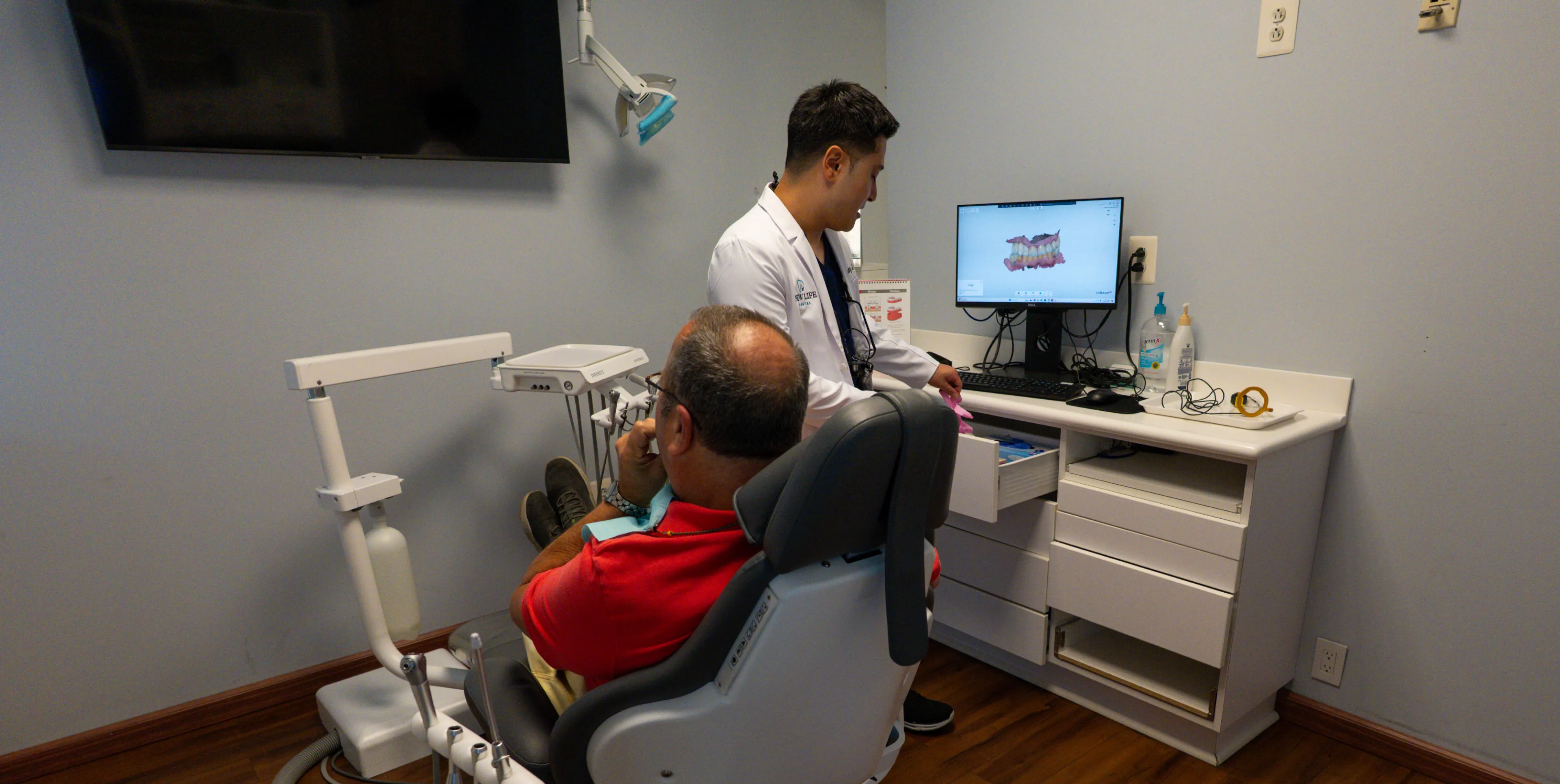
Dr. Cho will explain what he found, show you the images, and walk you through your options before any decisions are made. Nothing moves forward without your understanding and consent.
What is the difference between a cleaning and a deep cleaning?
A routine cleaning removes buildup above and just below the gumline. A deep cleaning addresses buildup further below the gumline and is recommended for patients with gum disease. Dr. Cho will let you know which applies to your situation during your exam.
Does insurance cover checkups?
Most PPO dental plans cover preventive care at 100 percent. We accept 14 major PPO plans and verify your benefits before your appointment. For patients without insurance, our in-house membership plan covers two cleanings and exams per year starting at $399.
What if I haven't been to the dentist in years?
There's no judgment here. Dr. Cho will do a thorough exam, explain what he finds, and build a plan that addresses your needs at a pace that works for you.
Do checkups hurt?
A routine cleaning and exam should not be painful. If you experience sensitivity, let your hygienist know and we'll adjust. Patients with significant anxiety can ask about sedation options before their visit.
How long does a routine checkup take?
New patients should plan for 60 to 90 minutes. Returning patients typically finish in 45 to 60 minutes, depending on whether X-rays are taken.
Emergency Dentistry
How do I reach you for an emergency?
We are open Monday through Thursday. For after-hours emergencies, call our office and follow the instructions on our voicemail.
Can children be seen for dental emergencies?
Yes. We treat patients of all ages. If your child is experiencing dental pain, a broken tooth, or any other urgent concern, call us right away.
What if I am nervous about coming in?
Tell us when you call. Dr. Cho adjusts his approach for anxious patients from the moment they arrive. Oral sedation is available for patients who need additional support during treatment.
Will I need a follow-up appointment?
In many cases, yes. Depending on the situation, the same-day visit may focus on immediate relief and diagnosis, with definitive treatment scheduled as a follow-up. You will know exactly what comes next before you leave.
How much does an emergency visit cost?
New Life Dental offers same-day emergency exams for $150. If additional treatment is needed, Dr. Cho will review your options and associated costs before any work begins. We accept most major PPO insurance plans and offer multiple financing options for follow-up care.
Can you treat a dental abscess the same day?
Yes. A dental abscess is a serious infection that should not be ignored. We will evaluate the affected area, address your pain, and begin treatment the same day. Left untreated, dental infections can spread and become a medical emergency.
What if my emergency happens after hours?
Call our office and follow the instructions on our voicemail. If you are experiencing severe swelling affecting your airway, difficulty breathing or swallowing, or significant facial trauma, go to the nearest emergency room.
Is a knocked-out tooth really a dental emergency?
Yes, and time is critical. A knocked-out permanent tooth has the best chance of being saved if you reach a dentist within 30 to 60 minutes. Call us immediately.
What counts as a dental emergency?
Any situation involving severe pain, swelling, a knocked-out tooth, a broken restoration, or signs of infection qualifies. If you are unsure, call us and describe your symptoms. We will help you determine how urgently you need to be seen.
How quickly can I be seen for a dental emergency?
Our goal is to see every emergency patient the same day they call. Contact us as early as possible to secure same-day availability.
Dental Implants
How do I get started?
Schedule a consultation online or call our office. Dr. Cho will perform a thorough evaluation, review your imaging, and give you a clear picture of your options, timeline, and investment before any decisions are made.
Does insurance cover dental implants?
Coverage for implants varies widely by plan. Some PPO plans cover a portion of the procedure. Our team will verify your benefits before treatment and walk you through your out-of-pocket costs. Financing options including CareCredit, Alphaeon Credit, and Cherry are available to make treatment more accessible.
What is the difference between a dental implant and a bridge?
A dental bridge fills a gap by anchoring a false tooth to the crowns placed on the two teeth on either side of the gap. This requires those healthy teeth to be filed down to support the bridge. An implant stands independently, preserves the surrounding teeth, and stimulates the jawbone to prevent bone loss. For most patients, an implant is the superior long-term solution.
Can I get an implant if I smoke?
Smoking significantly increases the risk of implant failure by interfering with the healing process. Dr. Cho will discuss your situation honestly during your consultation. Patients who are willing to stop smoking during the healing period may still be candidates.
How do I care for a dental implant?
You care for an implant the same way you care for a natural tooth. Brush twice daily, floss regularly, and attend routine checkups. There are no special adhesives or removal routines. The implant functions and is maintained just like the rest of your teeth.
What if I don't have enough bone for an implant?
Many patients who have experienced bone loss are still candidates for implants after a bone grafting procedure. Dr. Cho offers ridge preservation, ridge augmentation, and sinus lift procedures to rebuild bone volume when needed.
Am I too old for dental implants?
There is no upper age limit for dental implants. What matters is your overall health, bone density, and gum condition. Dr. Cho evaluates each patient individually and will give you an honest assessment of whether implants are a viable option for you.
How long does the entire implant process take?
The timeline varies depending on your situation. A straightforward single implant from placement to final crown typically takes three to six months. If bone grafting is required first, the process takes longer. Dr. Cho will give you a realistic timeline during your consultation.
Is the implant procedure painful?
Most patients are surprised by how manageable the procedure is. Local anesthesia is used throughout, and oral sedation is available for patients with anxiety or those who want to be more relaxed during treatment. Post-procedure discomfort is typically mild and manageable with over-the-counter pain relief.
How long do dental implants last?
With proper care and regular checkups, dental implants can last a lifetime. The crown attached to the implant may need to be replaced after 15 to 25 years depending on wear, but the implant post itself is designed to be a permanent solution.
All-on-4 Implants
How do I find out if I am a candidate?
Schedule a consultation with Dr. Cho. He will perform a full evaluation including CBCT imaging, review your bone structure and health history, and give you an honest assessment of whether All-on-4 is the right solution for you.
How long do All-on-4 implants last?
With proper care and regular checkups, the implants themselves are designed to last several decades and in many cases a lifetime. The bridge may require maintenance or replacement over time depending on wear. Dr. Cho will give you realistic expectations during your consultation.
How long does the entire process take?
From the initial consultation to your permanent restoration, the process typically takes several months to allow for proper healing and integration. Dr. Cho will give you a clear timeline during your consultation based on your specific situation.
Will I leave with teeth the same day?
Yes. All-on-4 allows for a temporary restoration to be placed on the same day as surgery. This temporary bridge is fully functional while your implants heal. Your permanent restoration is placed once the healing process is complete.
What is the restoration made from?
Most All-on-4 bridges are made from porcelain or zirconia. Both materials closely mimic the light-reflective properties of natural enamel, giving your restoration a realistic, natural appearance.
Is the procedure painful?
Local anesthesia is used throughout the procedure, and oral sedation is available for patients who want to be more relaxed during treatment. Most patients report that the experience is more manageable than they anticipated. Some soreness during the healing period is normal and manageable with medication.
Do I need a bone graft before All-on-4?
Most patients do not. The angled placement of the rear implants is specifically designed to work with the bone that is already present. Dr. Cho will evaluate your bone structure during your consultation and let you know if any preliminary treatment is needed.
Why does All-on-4 only need four implants?
The rear two implants are placed at a precise angle to maximize contact with the available jawbone, providing strong support without requiring the additional implants that traditional full-arch procedures needed. This engineering is what allows most patients to skip bone grafting altogether.
How is All-on-4 different from traditional dentures?
Traditional dentures rest on the gums and can slip, cause irritation, and limit what you eat. An All-on-4 restoration is anchored to implants, which means it is fixed, stable, and functions like natural teeth. It also stimulates the jawbone to prevent the bone loss that typically follows tooth loss.
What is All-on-4?
All-on-4 is a full-arch implant treatment that uses four strategically placed implants to support a complete fixed bridge. It is designed for patients who are missing all or most of their teeth in one or both arches and want a permanent alternative to traditional dentures.
Extractions
How do I schedule an extraction at New Life Dental?
Schedule online or call our office. If you are in pain or believe you need an urgent extraction, let us know when you contact us and we will prioritize getting you seen as quickly as possible.
What happens if I do not replace the extracted tooth?
When a tooth is removed and not replaced, the jawbone beneath the empty socket begins to resorb over time. This can cause neighboring teeth to shift, alter your bite, change the shape of your face over time, and limit your options for replacement later. Dr. Cho will walk you through your replacement options before you leave so you can make an informed decision.
What should I eat after an extraction?
Stick to soft foods for the first few days. Good options include yogurt, mashed potatoes, scrambled eggs, smoothies, and soup. Avoid hard, crunchy, or chewy foods until the site has healed. Avoid using a straw, as the suction can dislodge the blood clot.
Can wisdom teeth always be removed at New Life Dental?
Yes. Dr. Cho performs wisdom tooth extractions, including impacted cases, at New Life Dental. There is no referral to an outside oral surgeon for most wisdom tooth removals. He will evaluate your imaging and let you know if your case requires a specialist.
How soon can I replace the extracted tooth?
The timeline depends on the type of replacement and whether a bone graft was placed. Implants typically require several months of healing before placement. Dr. Cho will outline your full treatment timeline during your consultation so you know what to expect from extraction through final restoration.
Do I need a bone graft after every extraction?
Not necessarily. However, if you are considering an implant to replace the tooth, a bone graft placed at the time of extraction preserves the socket and maintains the bone volume needed for successful implant placement later. Dr. Cho will recommend a graft when it is clinically appropriate and explain the reasoning clearly.
What is a dry socket, and how do I avoid it?
Dry socket occurs when the blood clot that forms in the extraction site is dislodged or dissolves before the socket has healed, exposing the underlying bone. It is uncomfortable but treatable. To reduce the risk, avoid smoking, using a straw, or spitting forcefully in the days following your extraction. Dr. Cho will provide clear post-operative instructions to minimize your risk.
How long does recovery take?
Most patients recover from a routine extraction within a few days. Surgical extractions, such as wisdom tooth removal, may involve a longer recovery of one to two weeks. Dr. Cho will give you a realistic expectation based on your specific situation and walk you through how to care for the site during healing.
Does a tooth extraction hurt?
The area is fully numbed with local anesthesia before the procedure begins, so you should not feel pain during the extraction. Oral sedation is available for patients who are anxious or who anticipate a more involved procedure. Some soreness and swelling in the days following is normal and manageable with over-the-counter medication.
When is a tooth extraction necessary?
Extraction is recommended when a tooth cannot be saved through other treatment. Common reasons include severe decay, advanced gum disease, a cracked or fractured tooth that extends below the gumline, an infection that has not responded to treatment, and teeth that need to be removed to accommodate orthodontic treatment or a full-arch restoration.
Veneers
How do I get started?
Schedule a consultation online. Dr. Cho will evaluate your teeth, discuss your goals, and walk you through your options before any decisions are made.
Are veneers reversible?
Because enamel is removed during preparation, veneers are a permanent commitment. Dr. Cho discusses this thoroughly during your consultation so you can make a fully informed decision.
How many teeth can be treated with veneers?
Veneers can be placed on a single tooth or across multiple teeth. Full smile makeovers typically involve the upper front six to ten visible teeth. Dr. Cho will discuss the scope of treatment during your consultation.
Will veneers look natural?
Yes. Both porcelain and lithium disilicate ceramic veneers replicate the light-reflective properties of natural enamel. Dr. Cho matches shade and shape to your surrounding teeth and facial proportions for a result that looks naturally beautiful, not obviously cosmetic.
How do I care for my veneers?
Brush twice daily, floss regularly, and attend routine checkups. Avoid biting into very hard foods, and wear a night guard if you grind your teeth.
Can veneers fix crooked teeth?
Veneers can correct the appearance of mildly uneven teeth without orthodontic treatment. They are not a substitute for braces or aligners in cases of significant misalignment. Dr. Cho will assess your teeth and recommend the most appropriate solution.
Are veneers the same as crowns?
No. A veneer covers only the front surface of a tooth. A crown covers the entire tooth and is typically recommended when a tooth is significantly damaged or weakened.
What is the difference between porcelain and lithium disilicate ceramic veneers?
Porcelain veneers are layered to create depth and a natural appearance. Lithium disilicate ceramic veneers are milled from a single block of ceramic, making them exceptionally strong and highly translucent. Dr. Cho will recommend the right material based on your goals and bite.
Do veneers damage your natural teeth?
Veneer placement requires removing a small amount of enamel from the tooth surface. This is permanent, which is why Dr. Cho takes time during the consultation to make sure veneers are the right solution before proceeding.
How long do veneers last?
With proper care, porcelain and lithium disilicate ceramic veneers typically last between 10 and 20 years. Longevity depends on your oral hygiene habits, whether you grind your teeth, and how consistently you attend checkups.
Teeth Whitening
How do I schedule a whitening appointment?
Schedule online. If you are unsure whether whitening is right for your situation, a consultation with Dr. Cho will give you a clear answer.
How is professional whitening different from whitening toothpaste?
Whitening toothpastes polish surface stains through mild abrasives but do not contain bleaching agents and do not penetrate the enamel. They are useful for maintenance but will not produce comparable results.
Can I whiten if I have sensitive teeth?
Sensitivity does not automatically disqualify you. Dr. Cho evaluates your sensitivity during your consultation and adjusts treatment accordingly.
How do I maintain my results?
Limit staining foods and beverages, rinse with water after consuming them, brush twice daily, floss regularly, and attend routine cleanings. Periodic touch-ups keep your shade consistent.
Who is not a good candidate for whitening?
Whitening is not recommended for patients with untreated decay, gum disease, or significant enamel erosion, or for pregnant patients and children under 16. Patients with staining caused by medications or trauma may need a different solution. Dr. Cho will assess your situation and recommend the right approach.
Does whitening cause sensitivity?
Some patients experience temporary sensitivity during or after treatment, which typically resolves within 24 to 48 hours. If you have a history of sensitivity, let us know before treatment begins.
How long do results last?
Between one and three years depending on your diet, habits, and oral hygiene. Avoiding staining foods, not smoking, and attending regular cleanings all help. Periodic touch-ups maintain your shade over time.
Will whitening work on crowns, veneers, or bonding?
No. Whitening agents only affect natural enamel. Existing restorations will not change color. Dr. Cho will discuss how to approach whitening if you have visible restorations in your smile zone.
Is professional whitening safe?
Yes. Your gums and soft tissue are protected throughout and treatment is adjusted based on your sensitivity level.
How much whiter will my teeth get?
Results vary based on the nature of your staining and your natural tooth color. Most patients achieve several shades of improvement after a single visit. Dr. Cho sets realistic expectations during your consultation.
Ready When You Are
Call (301) 409-5450 or schedule online to set up your visit. We'll be in touch soon.